
By News Plug Newsroom
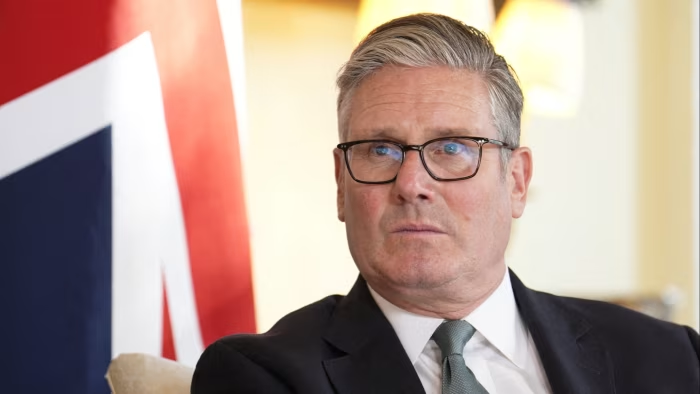
Prime Minister Keir Starmer has created a powerful new Budget board that merges senior Treasury officials with key Number 10 advisers. The group will meet weekly ahead of the 26 November Budget and is designed to centralise decision-making on economic strategy.
The board will be co-chaired by Baroness Minouche Shafik, the former LSE director, and Treasury minister Torsten Bell. Other members include Chancellor Rachel Reeves and senior business advisers who will feed in views from industry.
The move follows a bruising political backlash to Reeves’s first Budget earlier this year, which critics claimed relied too heavily on tax rises without enough focus on growth. By setting up this board, Starmer is aiming to show both the markets and voters that Labour can deliver stability, long-term planning, and credible growth policies.
Why it matters
The new board signals a shift in how economic power is handled inside government. Instead of leaving fiscal policy entirely to the Treasury, Starmer is embedding Number 10 more deeply into the process. It also shows Labour is serious about addressing inflation, public service funding, and restoring investor confidence after years of economic turbulence.
The counterpoint
Critics inside and outside Labour say the move risks turning economic policy into a technocratic echo chamber. Trade unions are already wary that the focus on business confidence could sideline workers’ pay and conditions. And while the board may project stability, it does not remove the reality that Labour faces tough choices on taxation and spending cuts to meet its fiscal rules.
TL;DR
- Starmer launches a new Budget board to centralise economic decisions.
- Co-chaired by Baroness Shafik and Treasury minister Torsten Bell.
- Aims to deliver growth, stability, and better coordination before November Budget.
- Critics warn it risks sidelining workers and concentrating power.
This is Starmer’s attempt to do what Tony Blair did with Bank of England independence – reassure the markets that Labour will never let the economy spiral. But centralising control carries its own risks. If this Budget board delivers growth, Starmer looks like a reformer. If it fails, he looks like a micromanager who didn’t trust his own Chancellor. The stakes could not be higher.