
Morrisons has reported a slowdown in quarterly sales growth as the supermarket chain grapples with rising costs, tight consumer budgets and intensifying competition from the discounters.
The UK’s fifth-largest grocer said like-for-like sales rose 3.0 per cent in the 13 weeks to 27 July, down from 3.9 per cent the previous quarter. The figures underline how the cost-of-living crisis is reshaping shopping habits, with many households trading down to cheaper rivals.
Chief executive Rami Baitiéh said customers were “feeling the squeeze” as higher food and energy bills forced them to be more selective at the tills. He also pointed to “significant cost headwinds” such as increased employer taxes and a new packaging levy.
Debt Reduction but Margin Pressure
Despite the slower pace of growth, Morrisons highlighted progress in paying down its debts. Gross borrowings have been cut to about £3.5 billion, down from £6.2 billion when the company was bought by the US private equity firm Clayton, Dubilier & Rice in 2021.
The reduction gives Morrisons more financial breathing room at a time when profit margins remain under strain. The group produces roughly half of its fresh food in-house, giving it more control over supply chains than some peers, though rising input costs and higher labour bills continue to bite.
Competitive Squeeze
The update comes as Morrisons fights to maintain its place in Britain’s fiercely competitive grocery market. According to Kantar data, it holds a market share of just over 8 per cent — putting it in danger of being overtaken by Lidl, which has surged to nearly 10.9 per cent and is closing in fast. Aldi remains comfortably ahead of both, with a similar share to Lidl and continuing to add customers drawn by its lower prices.
Tesco, the market leader, reported 5.1 per cent like-for-like growth in its most recent quarter, while Sainsbury’s saw a 4.7 per cent uplift. Asda, with around 11.8 per cent market share, also outpaces Morrisons on growth, leaving the Bradford-based chain increasingly squeezed between the big players and the discounters.
Tough Market Conditions
The broader backdrop offers little comfort. UK inflation remained at 3.8 per cent in August, with food prices still climbing. Growth in GDP was flat in July and forecasters expect weaker activity in the second half of the year, which is likely to keep pressure on household budgets.
Supermarkets are being forced to balance thin margins with consumer expectations of value. Loyalty cards, price-matching schemes and sharper promotions are now standard industry tools. Morrisons has leaned on its “More Card” programme, own-brand lines and in-store promotions to try to retain shoppers, but analysts warn it may need to go further.
Outlook
Analysts say Morrisons’ ability to defend its market share will hinge on delivering value while keeping costs under control. Its debt reduction is seen as a positive, but with discounters gaining ground and middle-class shoppers drifting toward Tesco and Sainsbury’s, the company faces a challenging Christmas trading period.
While sales are still rising, the latest figures suggest Morrisons risks being overtaken unless it finds a way to accelerate growth. For Britain’s most traditional supermarket chain, the coming quarters may be decisive in determining whether it can hold on to its position in the UK’s grocery hierarchy.
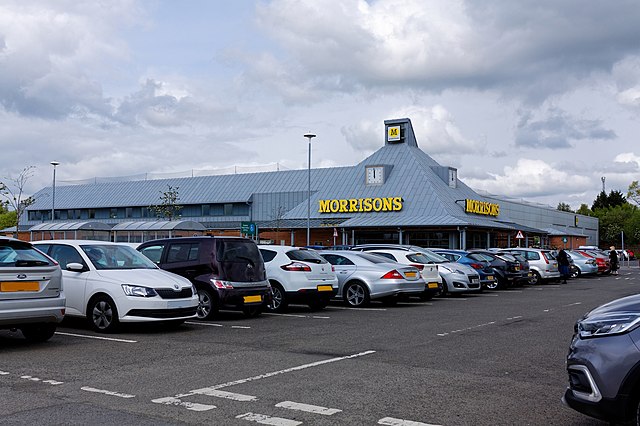
Image: Morrisons in Kilmarnock by Ian Rainey, licensed under CC BY-SA 2.0 via Wikimedia Commons.