
By NewsPlug Editorial
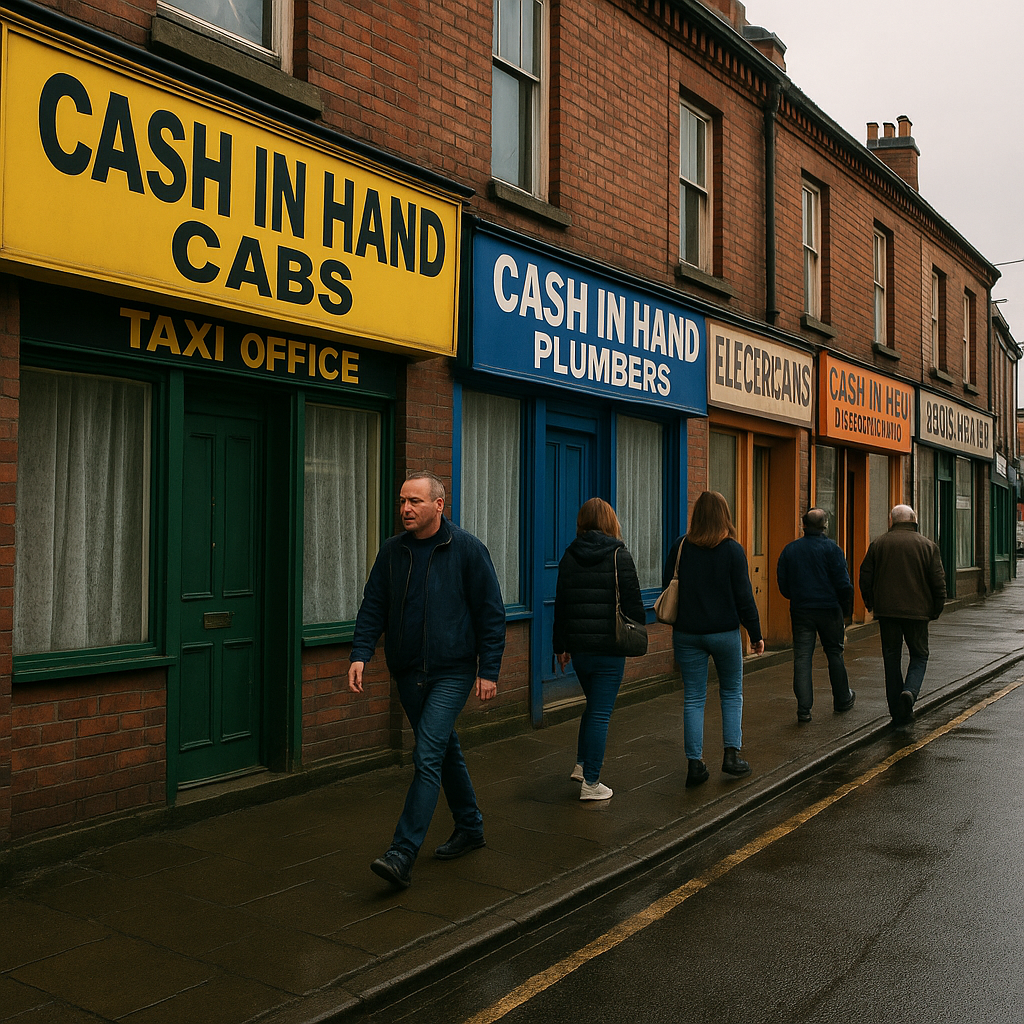
It’s the worst-kept secret in the UK economy: Britain runs on cash-in-hand. From tradesmen who’ll “do it cheaper without VAT” to students pulling shifts in bars for envelopes of twenties, there’s a shadow economy pulsing just beneath the surface of everyday life. Everyone knows it exists — but nobody wants to talk about how big it really is.
How Big Is the Hidden Economy?
According to the government’s own research, around 8.8% of UK adults admit to working in the hidden economy — up from 5% in 2015–16 (Gov.uk). Nearly half of that activity is paid in cash. Most of it is small-scale — half of hidden work brings in less than £250 — but in aggregate it adds up.
HMRC’s official “tax gap” — the difference between what tax should be collected and what actually is — hit £46.8 billion in 2022/23 (Gov.uk). A chunk of that is from deliberate tax evasion, and cash-in-hand work is a significant slice.
Older estimates suggest the UK shadow economy could be around 10% of GDP (The Guardian), putting it in line with other Western economies — not lawless, but not trivial either.
Why People Do It
Survival, Not Scams
A lot of people turn to undeclared income to make ends meet. With inflation biting and wages stagnant, moonlighting for cash is survival, not greed. Students, the unemployed, and part-timers are overrepresented in the hidden economy (Gov.uk).
Ellie, 22, Bristol student:
“I work in a café three days a week on the books. But every Saturday night I bar-back at a pub — cash, no contract. That extra £60 gets me through the week. Without it, I’d be living off noodles.”
Customer Pressure
Small businesses say it’s often the customers who push for it. “Can you lose the VAT?” is a familiar phrase for tradespeople and builders. Research from Loughborough University found that many SMEs see cash-in-hand as a way to keep customers happy while managing their own margins (Lboro.ac.uk).
Mark, 47, self-employed builder:
“Half the time it’s the customer who asks. They’ll say: ‘What’s the cash price?’ If I say no, they’ll find someone who will. I’d rather keep the work. The system doesn’t make it easy for small businesses, so you bend the rules.”
Distrust of the System
There’s also a cultural shrug. Many see undeclared side hustles as harmless, especially compared to corporate tax avoidance.
Jas, 34, cleaner in Birmingham:
“I clean three houses a week, all cash. My clients pay me £15 an hour straight into my hand. I know I should probably declare it, but when I read about billion-pound companies paying less tax than me, I don’t feel guilty.”
The Consequences
For individuals, cash work can feel like free money — no NI, no deductions. But it’s not risk-free. Hidden income means no payslips, no protections, no sick pay, and no pension contributions. It also makes workers vulnerable to exploitation: if you’re off the books, you have no recourse.
For the state, the scale is eye-watering. Every pound paid in cash that never sees HMRC is a pound less for schools, hospitals, or social care. That £46.8 billion tax gap could fund the entire NHS dentistry budget ten times over.
And there’s a fairness question. People who do declare their taxes feel like mugs, while those who skip the system quietly benefit. Over time, that corrodes trust in the entire tax system.
A Culture of Hypocrisy
Britain has a strange double standard on undeclared work. We demonise benefit cheats in tabloid headlines, while giving a wink and a nod to builders, cleaners, or gardeners who pocket a bit of untaxed cash. Even the government’s own surveys show many people don’t believe their side hustles count as “real” tax evasion — especially if the sums are small (NatCen).
Meanwhile, the state ramps up enforcement in some areas — requiring digital tax records under Making Tax Digital, or pushing cashless payments — while still tolerating loopholes at the corporate level. The result? A feeling that the rules apply unevenly, fuelling the very culture that drives the hidden economy.
Conclusion: The Economy We Don’t Talk About
Cash-in-hand Britain isn’t going away. It’s woven into the fabric of everyday life — from side hustles to Saturday jobs to tradesmen knocking a tenner off if you pay in notes. It thrives because it feels victimless, because everyone knows someone doing it, and because the official economy feels rigged in favour of the biggest players.
But the hidden economy has costs: unprotected workers, underfunded public services, and a tax system people stop believing in. As long as Britain tolerates it with a wink and a nod, the underground economy will remain one of the most open secrets of our national life — proof that while the UK dreams of going cashless, it still runs on envelopes stuffed with twenties.