By News Plug World Desk
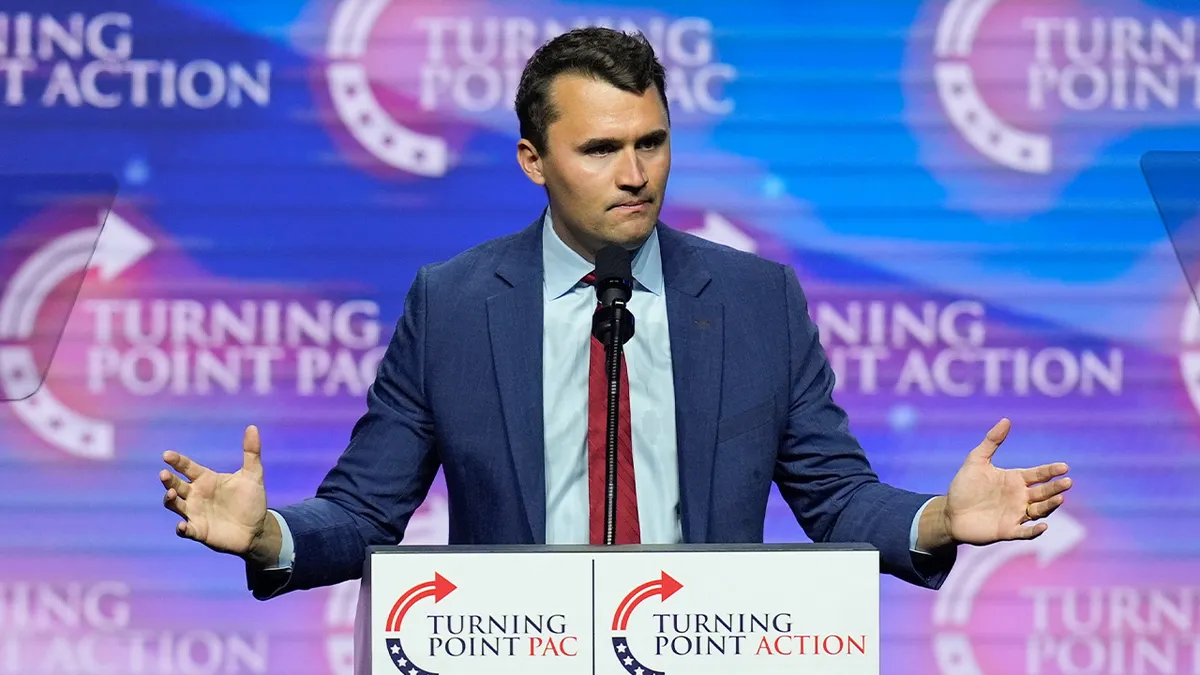
Charlie Kirk, one of the most recognisable conservative voices in America and founder of Turning Point USA, has been shot and killed during a live event at Utah Valley University. He was just 31 years old.
The killing, which unfolded in front of students, staff, and livestream cameras, is already being described as one of the most high-profile political assassinations in modern U.S. history.
What Happened in Utah
Kirk had been touring college campuses as part of his “American Comeback Tour,” a mix of live Q&A and debates pitched at winning over- or provoking-Gen Z audiences.
At around 12:20 p.m. local time on 10 September, he was hosting his signature “Prove Me Wrong” table on UVU’s campus in Orem, Utah, when gunfire erupted. Witnesses report at least one shot striking Kirk in the head or neck. Chaos followed, with students screaming and running for cover as the event descended into panic.
Paramedics rushed Kirk to hospital, but he died shortly after.
Police initially detained a man near the scene but later confirmed he was not the shooter. The suspect remains at large, with the FBI now leading the investigation. Security services have released no motive, though speculation is rife given Kirk’s polarising profile.
Who Was Charlie Kirk?
Kirk built his reputation as a culture warrior, launching Turning Point USA in 2012 to mobilise young conservatives on U.S. campuses. Over the next decade, he became a fixture in Republican politics—hosting podcasts, appearing regularly on Fox News, and cementing close ties with Donald Trump and his allies.
To his supporters, Kirk was a defender of free speech and traditional values in a hostile cultural landscape. To his critics, he was a provocateur who inflamed division and amplified misinformation. His sharp one-liners, college tours, and digital reach made him both a hero and a lightning rod.
His death abruptly ends a career that, love him or loathe him, shaped the tone of conservative politics for a generation raised online.
Political Shockwaves
News of Kirk’s killing reverberated instantly through Washington and beyond.
- Donald Trump called the shooting “an unspeakable act of political violence” and demanded the perpetrator be “brought to justice immediately.”
- House Speaker Mike Johnson and Senate Majority Leader John Thune issued joint statements condemning the attack, while House Minority Leader Hakeem Jeffries described it as “a tragedy that should shake every American.”
- Vice President J.D. Vance, a frequent ally of Kirk, posted: “This is not just an attack on a man, it is an attack on free speech.”
- FBI Director Kash Patel confirmed federal involvement, warning against “jumping to conclusions before facts are established.”
What’s striking is the rare moment of bipartisan agreement: across the political divide, leaders denounced the violence and urged Americans to step back from political hatred.
Why This Matters
Political violence in America isn’t new, but Kirk’s death feels like a tipping point. Unlike anonymous threats or angry protests, this was a targeted killing at a university—supposedly a space for free exchange of ideas.
Kirk was controversial, but he wasn’t obscure. He had millions of followers, close ties to power, and a talent for dominating online spaces. His assassination will likely deepen polarisation, hardening both his supporters and his detractors into even more rigid camps.
The bigger question is whether this will be treated as an isolated tragedy—or as the moment the U.S. is forced to reckon with its culture of escalating political violence.
The Cultural Fallout
Already, Kirk’s supporters are framing him as a martyr for conservative free speech. On X and Telegram channels, “Remember Kirk” hashtags trended within hours, alongside calls for tighter security at campus events.
On the other side, critics warn against hagiography, pointing to Kirk’s role in amplifying conspiracy theories and fuelling culture wars. To them, the tragedy is undeniable, but so is the danger of rewriting his legacy.
For students, particularly at Utah Valley University, the shooting also brings trauma and fear. Many are asking why security was so thin at an event featuring such a high-profile, divisive speaker. Universities across the country are already reassessing protocols.
TL;DR
- Charlie Kirk, 31, shot dead at Utah Valley University event on 10 Sept.
- Gunfire erupted during his “Prove Me Wrong” tour stop; shooter still at large.
- Kirk was a leading conservative activist and founder of Turning Point USA.
- Political leaders across the spectrum condemned the killing as an attack on free speech.
- His death risks intensifying polarisation and reshaping America’s political landscape.
As someone who tracks political culture, I’d say this moment will be remembered less for who Charlie Kirk was, and more for what his death represents. It’s a line crossed—campus debates turning into battlegrounds, rhetoric giving way to bullets. America now faces a choice: confront the climate of hostility that made this possible, or brace for more names added to the roll call of political violence.