By NewsPlug Editorial
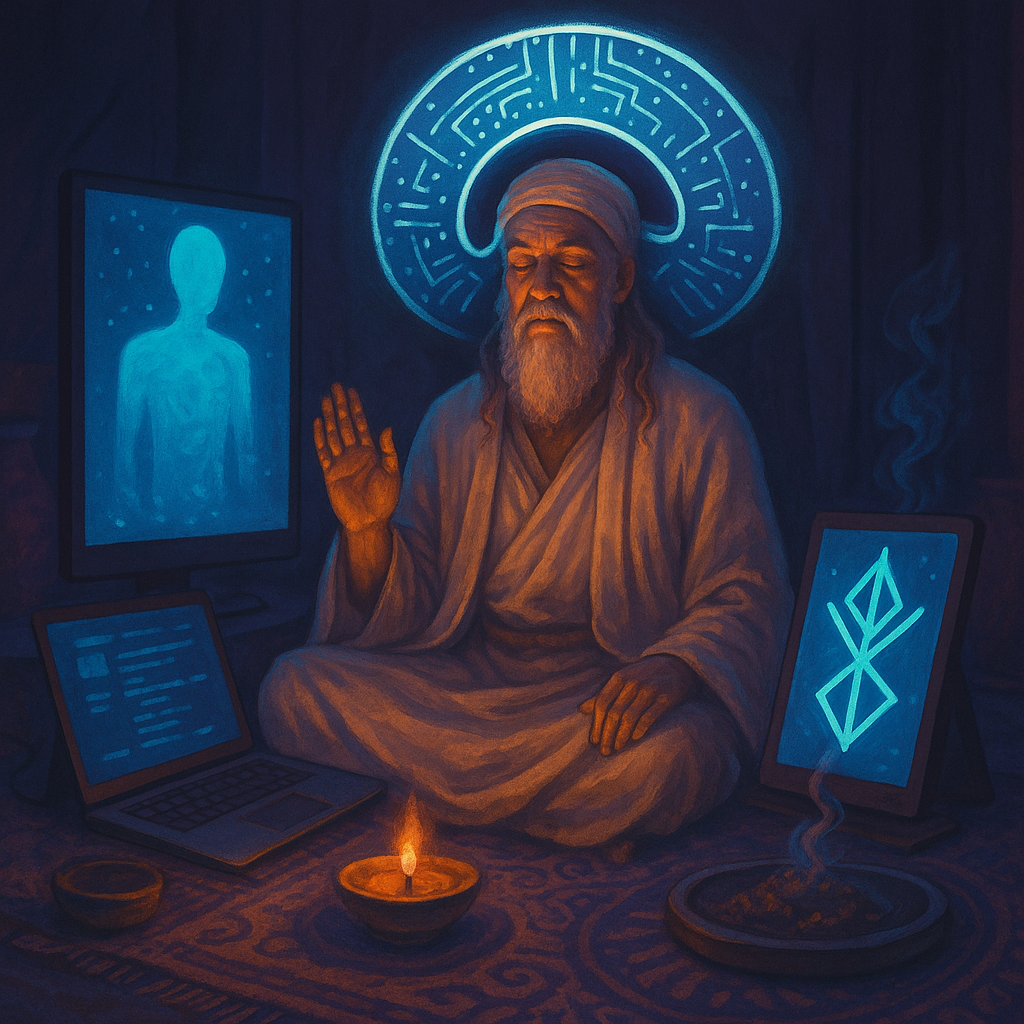
Forget ayahuasca retreats in Peru or crystal shops in Glastonbury — the UK’s newest spiritual guides don’t need psychedelics or incense. They’ve got ChatGPT, MidJourney, and a WiFi connection. Welcome to the rise of the AI shamans: self-styled mystics who blend artificial intelligence with ritual, therapy, and the occult.
What the Hell Is an AI Shaman?
It started in niche Discord servers and TikTok corners: people asking AI chatbots to channel spirits, generate “prophecies,” or write custom prayers. Some now run full-blown “AI ceremonies” where participants bring questions about love, death, or purpose — and get algorithmic answers dressed up in ritual.
One AI shaman in Bristol told News Plug he uses AI-generated sigils (digital spell-like symbols created with MidJourney) during guided meditations. Another in Hackney runs “prompted prophecy” sessions: participants feed personal details into an AI, which produces poetic guidance, often read aloud in candlelit rooms.
It’s half mysticism, half tech experiment — and, depending on your perspective, either groundbreaking or deeply cursed.
Why It’s Taking Off
- Lockdown spirituality meets tech obsession. Cut off from group rituals during COVID, many seekers turned online. Post-pandemic, tech-infused spirituality feels like a natural extension.
- Gen Z’s comfort with AI. For younger audiences raised on algorithms, there’s no contradiction between tech and transcendence. A bot can be as valid a medium as tarot or astrology.
- The therapy gap. With NHS mental health waiting lists hitting record highs (BBC), alternative practices — even weird ones — fill a demand for comfort and meaning.
- Content economy. TikTok clips of “AI spirit readings” or “algorithmic visions” rack up thousands of views. The spectacle itself drives the trend.
Rituals of the Future
- AI Tarot: Instead of drawing physical cards, users input a question and receive AI-generated cards with surreal, shifting imagery.
- Digital Sigils: Shamans create sigils by feeding symbolic prompts into image generators. These are then printed, tattooed, or used as talismans.
- Algorithmic Meditation: AI-generated soundscapes guide participants through visualisations, sometimes synced with biometric data from wearables.
- Prompted Prophecy: Participants provide birth dates, fears, or hopes; AI spits out poetry or parables that are read as guidance.
One Hackney-based practitioner calls it “a remix of divination — but the gods are neural nets.”
The Critics
Not everyone is convinced. Traditional shamans and spiritual teachers accuse AI shamans of trivialising sacred practices. Psychologists warn that people could over-invest in machine-generated outputs, mistaking them for genuine insight.
And there are obvious risks: unlike licensed therapists, AI shamans aren’t regulated. Someone with serious trauma could end up getting “advice” from an untested prompt rather than professional care.
Still, defenders argue that all spirituality is constructed — whether it’s runes, horoscopes, or algorithms. As one practitioner put it: “It’s not about whether the machine is divine — it’s about whether the ritual gives people meaning.”
Why It Matters
Even if AI shamanism seems fringe, it reflects broader cultural shifts:
- People are blending tech and spirituality in ways unimaginable a decade ago.
- Faith and mysticism are no longer tied to tradition — they’re being hacked and remixed.
- The lines between therapy, entertainment, and ritual are dissolving.
As AI becomes embedded in daily life, expect more hybrid practices like this. Today it’s shamans with chatbots; tomorrow it could be AI exorcists or digital afterlife priests.
Would you consider visiting an AI Shaman?
TL;DR
- A new scene of “AI shamans” is emerging in the UK.
- They use tools like ChatGPT and MidJourney to create rituals, prophecies, and spiritual experiences.
- The trend is fuelled by lockdown spirituality, Gen Z’s comfort with tech, and gaps in mental health care.
- Critics say it’s exploitative or trivialising, but practitioners argue meaning is meaning — even if it comes from a machine.