
By NewsPlug Feature Desk
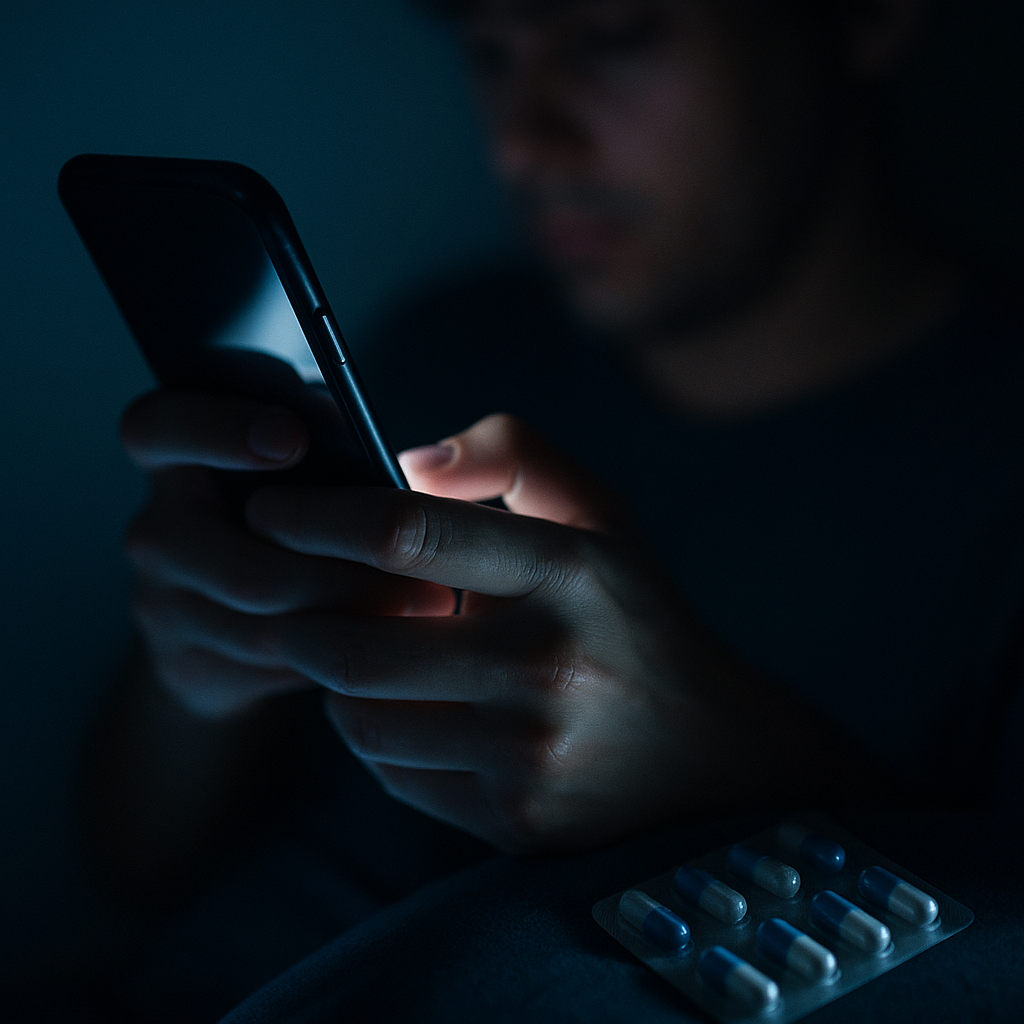
Prescriptions for antidepressants and anxiety drugs in England are at record highs. At the same time, under-25s are spending more of their day on TikTok, Instagram and Snapchat than any other group. But what about Millennials — people aged roughly 25-44 – who also spend hours online and are dealing with their own mental-health challenges? Could their habits tell us more about whether it’s digital living or generational stress driving the medicine boom?
A Generation on Medication
NHS England’s Annual Prescribing Cost Analysis 2023/24 shows 89 million antidepressant items were dispensed in England that year – up 3.3% on the previous 12 months. Prescriptions for anxiety and sleep-related medications hit 13.5 million items.
And the rise hasn’t slowed. According to the NHS Business Services Authority’s Medicines Used in Mental Health 2024/25, each quarter brings 23–24 million antidepressant items and about 1 million hypnotics/anxiolytics.
The BBC recently highlighted how prescribing rates have doubled in the past decade, particularly among young people, with GPs pointing to long waits for therapy as a driver (BBC News).
A Generation Online
At the same time, screen time has surged. Ofcom’s Online Nation 2024 shows 18–24-year-olds spend around 64 minutes per day on TikTok – rising to 77 minutes for young women — and 55 minutes on Snapchat. Younger adults also use 8–9 different platforms on average, meaning the feed never really switches off.
Millennials (25-44s) are not far behind. Ofcom notes they are “the most active app users overall,” juggling more apps daily than any other adult group (Ofcom Media Use & Attitudes).
As Yih-Choung Teh, Ofcom’s Group Director for Strategy and Research, put it:
“Teenagers today are increasingly unlikely to pick up a newspaper or tune into TV news, instead preferring to keep up-to-date by scrolling through their social feeds.”
(Ofcom)
The Research: Cause, Correlation, or Both?
A longitudinal UK study published in Psychological Medicine found that greater social-media use predicted later increases in depressive and anxiety symptoms, with self-esteem playing a mediating role (Cambridge University Press, 2021).
NHS Digital’s Mental Health of Children and Young People in England 2023 survey adds context: about 1 in 5 children and young adults had a probable mental disorder in 2023. That figure has stabilised since 2020, but it remains far higher than a decade ago.
Beyond the Phone
Social media is one piece of the puzzle. Other pressures weigh heavily too:
- School absence: Persistent absenteeism strongly correlates with poor mental health (ONS, 2024).
- Economic strain: Younger households face faster-rising living costs than older, mortgage-free ones (ONS inflation data).
- COVID aftershocks: Disruption to education and social lives left confidence fragile.
As Melanie Dawes, Ofcom Chief Executive, warned earlier this year, children’s online experiences are being “blighted by harmful content they couldn’t avoid or control” (Reuters). That framing matters: the platforms amplify risk, but the roots of distress run deeper.
Why Prescriptions Keep Rising
With waiting lists for NHS talking therapies stretching into months, GPs often turn to prescriptions as the first line of support. BBC reporting notes that this trend has become the “default” for many young patients when therapy isn’t quickly available (BBC News).
NHS England is piloting digital therapies, with early evidence suggesting online CBT can be as effective as face-to-face treatment for some conditions. For both Gen Z and Millennials, digital options could be an important bridge.
So, Is TikTok to Blame?
The short answer: no – at least, not on its own. Heavy scrolling is associated with poorer mental-health outcomes, but the rise in prescriptions reflects a wider web of pressures: school gaps, economic stress, NHS bottlenecks, and pandemic scars.
Conclusion: Shared Pressures, Different Stories
The evidence shows two truths: Gen Z spends more time online than any other group, and record numbers of both Gen Z and Millennials are being prescribed antidepressants. The link between the two is real but tangled.
Social media can be both connector and corrosive; prescriptions can be both lifeline and sticking plaster. It would be simplistic to scapegoat TikTok or Instagram, even though the correlation is clear. The harder truth is that young people across generations are carrying overlapping pressures – from financial strain to disrupted education to a health system under pressure.
The real challenge for policymakers isn’t banning apps, but expanding timely access to therapy, addressing inequality, and equipping people with the tools to build resilience in a digital world that now feels impossible to step away from..
TL;DR
- Meds up: 89m antidepressant items in 2023/24 (+3.3% YoY) (NHS Digital).
- Scroll up: Gen Z spends ~64 mins/day on TikTok; Millennials are the heaviest app users overall (Ofcom Online Nation 2024).
- Research: Social-media intensity predicts later anxiety/depression but doesn’t act alone (Cambridge University Press, 2021).
- Context: School absence, cost-of-living, and COVID aftershocks weigh just as heavily (ONS, 2024).
- Next steps: More therapy access, smarter digital habits, and NHS investment in digital support (NHS England).